Phone addiction is the everyday name for using your smartphone so often and so automatically that it gets in the way of sleep, work, focus or people, even when you want to use it less. It isn't an official diagnosis; researchers usually call it problematic smartphone use. So how do you break phone addiction? Not with willpower or a single app limit. You find out when and why you pick up the phone, add friction to the habits you want to drop, give yourself something better to do in those moments, and set a few boundaries that hold. This guide walks you through each step and a one-week plan to start.
Key takeaways
- Most checking is habit, not notifications. In one small study filming real phone use, 89% of interactions were started by the user, not by an alert.
- Friction works better than willpower alone. A pause before opening an app cut app openings by 57% in a six-week field experiment.
- You don't need a full detox. In a German study, using the phone one hour less a day worked as well as a week without it, and the effects lasted longer.
- Batch notifications instead of killing them all. Getting them three times a day improved mood and attention; turning them all off raised anxiety.
- Protect the bedroom. More than a third of US adults say checking the news on their phone at bedtime makes their sleep worse.
Is phone addiction real?
Neither of the two main diagnostic manuals lists smartphone addiction. The American Psychiatric Association notes that gambling disorder is the only behavioral addiction in the DSM-5-TR, with internet gaming disorder listed only as a condition for further research. The World Health Organization's ICD-11 includes gaming disorder, but not phone use in general.
That doesn't mean the problem isn't real. A review of 41 studies found a median of about 23% of children and young people showed problematic smartphone use, which was linked to anxiety, depression, stress and poorer sleep. And adults feel it too: in a 2026 Pew Research Center survey, 53% of US adults said they spend too much time on their smartphone, and 45% had tried to cut back in the past year. Only a quarter of those who tried called it very or extremely successful.
A useful test is not the number of hours but the cost: are you losing sleep, focus, time with people or things you care about, and do you keep going even though you want to stop?
Why you keep picking up your phone
Notifications get the blame, but most checking starts with you. Researchers who filmed people's everyday phone use with wearable cameras found that 89% of interactions were self-initiated, following learned routines. An older study described a typical checking session as lasting less than 30 seconds: unlock, open one app, put it away. Then again.
That's a habit loop. A cue (boredom, a pause, an awkward moment, a hard task, lying in bed) leads to an action (unlock, scroll), which gives a small reward (something new, a bit of relief). Repeat it hundreds of times and it becomes automatic. This may be why screen time limits often fail: they fight the action at the last second, when the habit is strongest. It's easy to tap "Ignore Limit" without thinking, or to delete an app and then open the same site in the browser.
The fix works on the whole loop: notice the cues, make the action harder and give the moment a different reward.
How to break phone addiction: 5 steps
1. Track your pickups for three days
Before changing anything, look at your phone's own data (Screen Time on iPhone, Digital Wellbeing on Android): daily time, pickups and the apps you open first. Then, for three days, note briefly what was happening right before you picked up the phone when you didn't need to. Bored? Waiting? Avoiding a task? Anxious? In bed? For example, you might notice that most of your pickups happen while you wait for something to load at work, or in the 20 minutes after you get into bed.
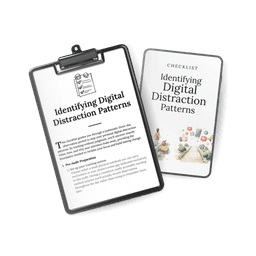
You'll usually find two or three cues that cause most of the checking. Those are your targets. Our free Identifying Digital Distraction Patterns checklist walks you through this audit. If your problem is broader than the phone, our guide on how to stay focused has a full attention audit.
2. Add friction where it matters
Make the habits you want to drop slightly harder, and leave useful things easy.
- Put a pause before your worst apps. In a field experiment with 280 people, an app that adds a short breathing pause before opening chosen apps reduced openings of those apps by 57% after six weeks. One of the authors developed the app, and the participants were people who had already installed it, so treat the size of the effect with some caution. But the idea is simple to copy with any app blocker or shortcut that adds a delay.
- Try grayscale on the apps that pull you in. In a study of 84 smartphone users, one week of grayscale cut daily screen time by about 20 minutes and lowered stress, although people unlocked their phones just as often. The idea is that without color, feeds feel a bit less appealing.
- Clean the home screen. Move social and video apps off the first screen or into a folder. Log out after each use so opening them takes a few extra steps.
- Close the back doors. If you delete an app, block the website version too, or the habit will move to the browser.
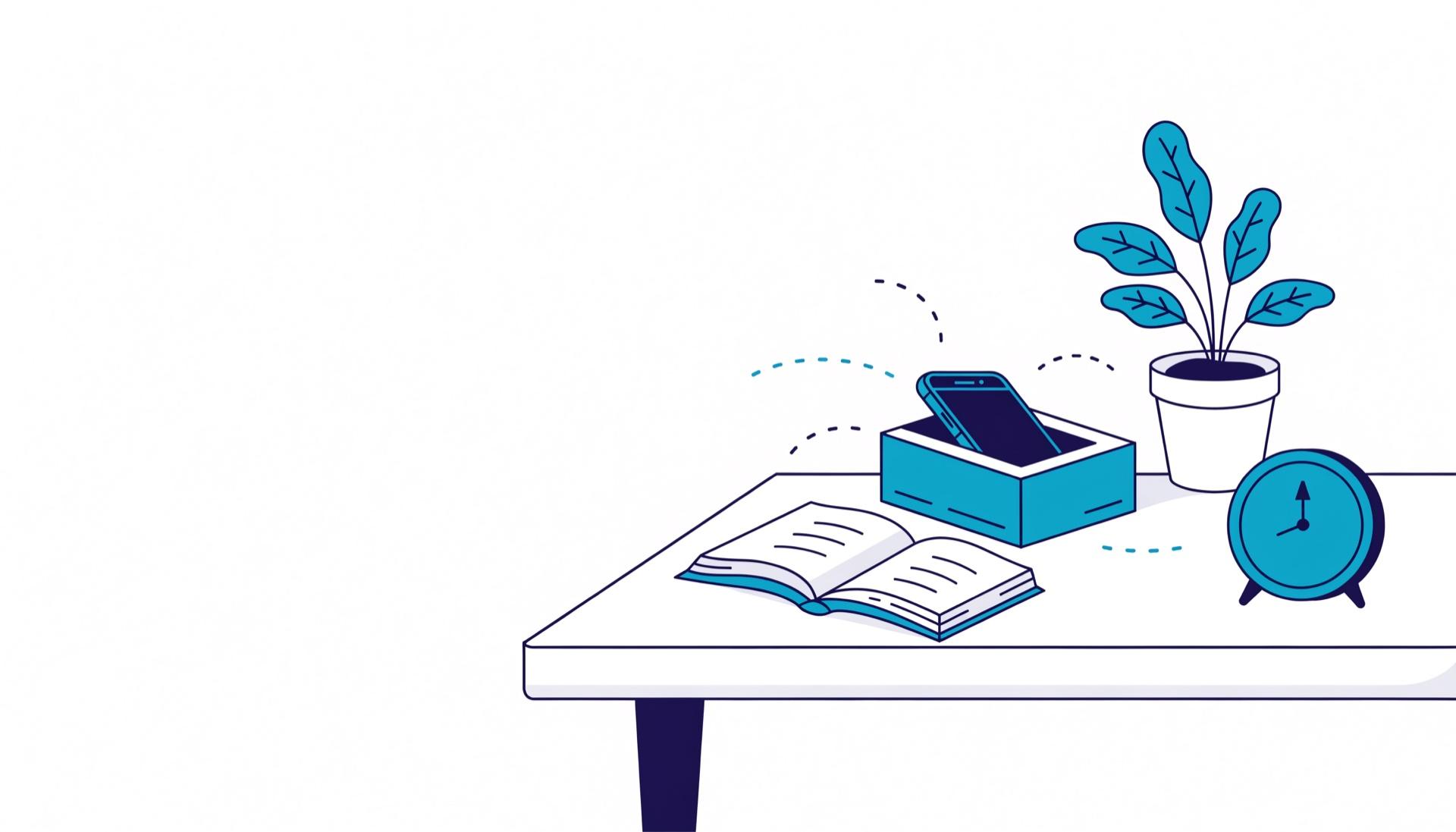
- Create distance. Put the phone in another room or a drawer during focused work. A famous 2017 study suggested that even a phone on the desk drains mental capacity, but a preregistered replication did not find the effect, and a 2024 meta-analysis of 56 studies found at most a small effect on working memory. Distance still helps for a simpler reason: if the phone isn't there, you can't pick it up.
3. Batch your notifications
Alerts aren't the main cause, but they add interruptions. In a two-week study of 221 students, people reported more inattention and hyperactivity during the week their alerts were on. In a randomized field experiment with 237 people, getting notifications in batches three times a day improved attention, productivity and mood and lowered stress. Switching notifications off entirely brought fewer benefits and more anxiety and fear of missing out.
So keep calls and messages from the people who matter, use your phone's scheduled summary or focus modes for the rest, and turn off badges and alerts from social, shopping and news apps.
4. Replace, don't just remove
If boredom was the cue and scrolling was the relief, removing the phone leaves a gap, and gaps get filled with the old habit. Decide in advance what you'll do instead in your two or three trigger moments:
- Waiting in line: look around, breathe, think through tomorrow.
- Stuck on a task: stand up, drink water, write the next tiny step.
- Evening on the couch: a paper book, a puzzle, a call, a walk.
- Lying in bed: a book or audio with the screen off.
Keep the replacement where the phone used to be: the book on the nightstand, the notebook on the desk.
5. Set boundaries that hold
Pick a few phone-free times and places and make them non-negotiable:
- The bedroom. In a 2025 survey for the American Academy of Sleep Medicine, 38% of US adults said viewing news on a phone or tablet before bed made their sleep worse. In a small pilot trial with 38 college students, those who avoided their phone for 30 minutes before bed for four weeks fell asleep faster. Charge your phone outside the bedroom and use a cheap alarm clock. Our guide to a morning and night routine shows what to do in that time instead.
- The first 30 minutes of the day. Start with your own plan instead of other people's messages.
- Meals and conversations. Phone face down and out of reach, or in another room.
- Focus blocks. Our guide on how to enter a flow state shows how to set up a deep work session with the phone out of the way. For the space around it, see our home office setup guide.
If you want to set these up across all your devices, apps and the people who expect quick replies, The Digital Boundary Setup System is our guide with tools for tracking use, configuring devices, communication rules and regular check-ins.
Do you need a full digital detox?
Probably not. In a study of 619 adults in Germany, both a week without a smartphone and a week of using it one hour less per day reduced problematic use and symptoms of depression and anxiety. Most of the effects were stronger and more stable four months later in the one-hour group than in the abstinence group, and the authors concluded that complete abstinence is not necessary.
Limits on social media point the same way. In a study of 143 university students, limiting Facebook, Instagram and Snapchat to 10 minutes per platform per day for three weeks reduced loneliness and depression more than in the control group. Neither study is conclusive: one used students, the other volunteers, and both relied on self-reports, so treat them as encouraging.
A short detox can still be a useful reset, a weekend or a phone-free day, as long as you plan what changes afterwards. Our free Digital Detox Implementation checklist helps you run one and keep the habits that work.
What about a "dopamine detox"?
A "dopamine detox" usually means cutting out all stimulating activities for a day or more to "reset" your brain. The name is misleading. As a psychologist explains on the Cleveland Clinic's health site, there is no such thing as a true dopamine detox: you can't get rid of dopamine, and your body needs it. The useful part behind the trend is older and simpler: reduce the cues and easy access that trigger a habit, which is what the steps above do.
A one-week plan to start
| Day | What to do |
| Days 1 to 3 | Check your screen time data and note what happens right before each unneeded pickup |
| Day 4 | Clean your home screen, turn off nonessential notifications, set up batched summaries |
| Day 5 | Add a pause or grayscale to your two worst apps, and block their website versions |
| Day 6 | Move charging out of the bedroom, buy or dig out an alarm clock |
| Day 7 | Pick a replacement for each trigger, check your numbers and adjust |
After that, aim to cut about an hour a day rather than everything at once, and review your numbers weekly. Changing a habit takes time; our guide on how long it takes to form a habit explains what to expect. If you slip, that's normal: look at what triggered it and add friction there.
If you're not sure how much your phone runs your day, 13 Signs Your Phone Is the Real CEO is a quick read that helps you spot the patterns. If you run a business or lead a team, Digital Detox for Founders covers notifications, boundaries with devices and work routines in more depth.
When to get help
If phone use is hurting your sleep, work, studies or relationships and you can't cut back despite trying, or if you use it to escape anxiety or low mood that doesn't lift, talk to a doctor or mental health professional. A therapist can help with approaches such as cognitive behavioral therapy, and can also check for related issues like anxiety, depression or ADHD.
Frequently asked questions
How do I break my phone addiction?
Track when and why you pick up the phone, add friction to the apps that pull you in (a pause, grayscale, logging out, blocking the website), batch notifications, plan what you'll do instead in your trigger moments and keep the phone out of the bedroom.
How do I stop doomscrolling at night?
Charge your phone outside the bedroom, use a separate alarm clock and put a book or audio in its place. If that's not possible yet, set a downtime schedule that locks feeds an hour before bed and turn the screen to grayscale in the evening.
Does grayscale really reduce screen time?
In one study, a week of grayscale reduced daily screen time by about 20 minutes and lowered stress, but people unlocked their phones just as often. It helps most as one part of a plan.
How much screen time is too much for adults?
There's no official number for adults. A better test is the cost: if your phone use is costing you sleep, focus, work or time with people, it's too much for you.
Are screen time apps worth it?
Built-in limits are easy to dismiss. In one study, a tool that adds a short pause before opening chosen apps cut openings substantially. Pair it with blocking the browser route.
How long does it take to break phone addiction?
It depends on how strong the habit is. In one study, a week of using the phone one hour less per day already reduced problematic use, with effects still visible four months later. Many habits take weeks or more to change, so give it time.
How we put this guide together
This guide was written with AI assistance and edited by the AllMyGuides team. None of us is a doctor or therapist, and this guide is not medical advice. We started from the questions people ask about cutting back on their phone and why screen time limits keep failing them. Then we checked each claim against peer-reviewed studies, official sources from the American Psychiatric Association and the WHO, and survey data from Pew Research Center and the American Academy of Sleep Medicine. We opened every source linked above and confirmed that it says what we report (for some studies only the abstract or a university summary was publicly available). Many of these studies are small or use students, so we treat their numbers as estimates. Last checked: November 2026.