A morning routine is a short, repeatable set of actions you do in the same order after waking up, so the start of your day runs on habit instead of decisions. A good one isn't a 5 a.m. alarm and twelve rituals copied from a CEO. It has three parts: an evening that sets up the morning, a wake-up that works with your body clock, and one or two anchors in the first hour that move your day forward. This guide shows you how to build each part, a minimum version for bad days, and how to shift earlier if you're not a morning person.
Key takeaways
- The morning starts the night before. Many morning routines fail because of a late, chaotic evening rather than a lack of discipline.
- Regular beats early. In a study of more than 60,000 adults, people with more regular sleep had a lower risk of death than the least regular, even after accounting for how long they slept.
- Get light early. Morning light tends to shift your body clock earlier; bright light late in the evening tends to shift it later.
- Keep it small. One or two anchors that survive your worst morning beat a long routine you drop by Thursday.
- Night owls can shift, slowly. In one small study, a three-week plan moved night owls' sleep and wake times about two hours earlier.
Why most morning routines fail
Search for "morning routine" and you'll find celebrity schedules, 5 a.m. clubs and lists of 20 habits. They fail for normal people for three predictable reasons:
- They cut sleep. Waking earlier without going to bed earlier just means less sleep. Experts recommend that adults sleep 7 or more hours per night on a regular basis, and the CDC has reported that more than a third of American adults don't get enough sleep regularly.
- They ignore your body clock. Some people are naturally earlier or later. A genetic study of nearly 700,000 people found 351 genetic regions linked to being a morning person. That doesn't lock you in, but it explains why copying someone else's 5 a.m. start can feel impossible.
- They're too big. A routine that needs an hour and perfect conditions dies on the first busy morning. The routines that last are small enough to survive your worst day.
Part 1: The evening routine that makes mornings work
How your morning goes depends a lot on the evening before. A short night routine does three jobs: it gets you to bed on time, it calms your mind, and it removes decisions from the morning.
Set a wind-down alarm
Many people know they should go to bed but keep scrolling or watching anyway. Researchers call this bedtime procrastination: failing to go to bed at the intended time without an outside reason. In a survey of 177 people, it was linked to getting too little sleep. Harvard Health suggests setting a wind-down alarm 30 minutes to an hour before bedtime. When it rings, start your night routine, wherever you are in your show or feed.
Dim the screens
Bright screens late in the evening can push your body clock later. In a small lab study of 12 young adults, reading on a light-emitting e-reader for about four hours before bed suppressed melatonin, and people took nearly 10 minutes longer to fall asleep and were less alert the next morning than when they read a printed book. That was a lot of screen time at full brightness, so treat it as a direction rather than a rule: lower the light, put the phone away and read on paper if you can. Our guide on how to break phone addiction shows how to keep the phone out of the bedroom.
Write tomorrow's to-do list
Worrying about tomorrow keeps many people awake. In a sleep lab study of 57 young adults, those who spent five minutes writing a to-do list for the coming days fell asleep significantly faster than those who wrote about tasks they had already completed. The more specific the list, the faster they fell asleep. Write the one or two things that matter most tomorrow, then close the notebook.
Prepare the first ten minutes
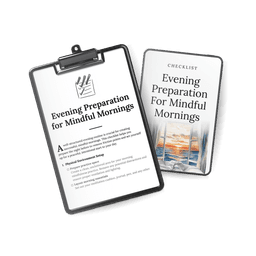
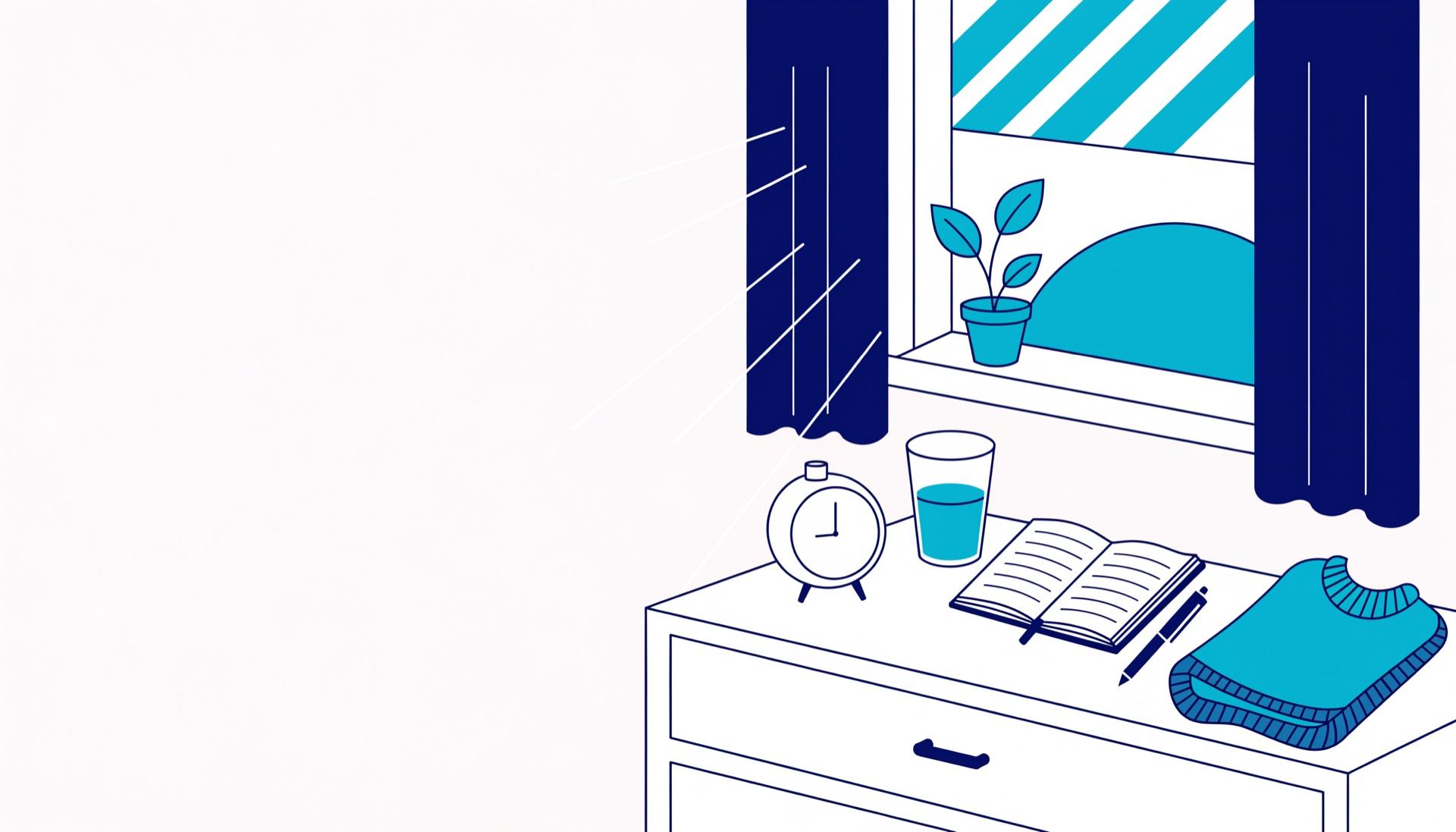
Lay out clothes, fill the water glass, set up the coffee, put your notebook where you'll sit. Every decision you make the night before is one less thing to deal with in the morning. Our free Evening Preparation for Mindful Mornings checklist walks you through it, and The Evening Preparation Protocol is our full guide to the evening side, including screens, sleep setup and what to do when the routine breaks down.
Part 2: A wake-up that works with your body clock
Wake at the same time, most days
Regularity seems to matter more than the exact hour. In a study of 60,977 UK adults who wore activity trackers, people in the four more regular groups had a 20% to 48% lower risk of death from any cause over the follow-up than the least regular fifth, and regularity predicted risk better than sleep length. It's an observational study, so it shows a link rather than proof, but it's a strong reason to keep your wake-up time steady, including most weekends.
Get light early
Light is the main signal your body clock uses. The NIH notes that light and dark have the biggest influence on circadian rhythms. In a study of 21 healthy adults, light given after the body's lowest temperature point (usually a couple of hours before your normal wake time) shifted the clock earlier, while light given before it shifted the clock later. In practice: open the curtains, have breakfast by a window or take a short walk outside soon after waking.
Expect grogginess, and don't judge your day by it
That heavy feeling after waking has a name: sleep inertia. A 2019 review found that performance usually recovers within about 30 minutes of waking, though full recovery may take at least an hour. Don't schedule your hardest decision for the first ten minutes, and don't conclude the routine "doesn't work" because the first minutes feel slow.
What about snoozing?
Snoozing gets a bad reputation, but the evidence is milder than its reputation. In a Swedish study, snoozing was common, especially in younger people and night owls, and 30 minutes of snoozing didn't harm performance on cognitive tests in habitual snoozers. If a short snooze helps you, fine. If you snooze for an hour every day, the real issue is usually too little sleep or a wake-up time that doesn't fit you.
Part 3: The first 90 minutes
Pick one or two anchors, not ten. An anchor is a small action you do every morning, in the same place, right after something you already do. For example:
- Body: after you put the kettle on, five minutes of stretching or a walk around the block.
- Mind: after you sit down with coffee, three slow breaths and one line about how you feel.
- Direction: before you open email, look at last night's list and choose today's most important task.
Phrasing it as "after X, I will Y" is called an implementation intention. A review of 94 tests found that this kind of if-then plan had a positive effect on reaching goals, although results vary from study to study. It's a simple way to tie a new habit to something you already do.
Protect the first block of focus: before checking messages, spend 20 to 60 minutes on the task you chose. Our guide on how to enter a flow state shows how to set up that session. If you want a structured plan for this part of the day, Optimizing First Morning 90 Minutes is our guide to energy, focus and priorities in the first hour and a half. If you prefer a calmer start, our free Essential Morning Mindfulness Practice checklist and The 7-Step Morning Mindfulness Routine focus on breathing, movement and intention setting.
A simple morning and night routine
| When | Full version | Minimum version for bad days |
| 60 min before bed | Wind-down alarm, screens off or dimmed, tidy the next morning's setup | Phone on the charger outside the bedroom |
| Before sleep | Write tomorrow's top tasks, read on paper | Write one task |
| Wake-up | Same time, curtains open, water | Same time, curtains open |
| First 30 min | Light or a short walk, breakfast, one body or mind anchor | Three slow breaths by the window |
| Next 60 min | Most important task before messages | 10 minutes on the most important task |
The minimum version is what keeps the routine alive. On a bad morning, do the small version and count it as a win. New routines take time to become automatic; our guide on how long it takes to form a habit explains why missing a day doesn't reset your progress.
How to wake up early if you're not a morning person
You can shift earlier, but gradually and with your evening. In a three-week study, 22 night owls moved their sleep and wake times about two hours earlier without losing sleep, and reported less depression and stress. According to the University of Birmingham, participants kept fixed sleep and wake times every day, got as much outdoor light as possible in the morning, had breakfast soon after waking and didn't eat dinner after 7 p.m. It was a small, short study, and participants shifted by two to three hours at once. Here is a gentler version of the same levers: If stress keeps you wired at night, our guide on how to lower cortisol covers the habits that support a calmer daily rhythm.
- Move your wake-up time earlier by 15 to 30 minutes every few days, not two hours at once.
- Move your bedtime earlier by the same amount.
- Get outside light soon after waking.
- Keep the same times on weekends as much as you can.
- Keep caffeine to the morning. In a small study, 400 mg of caffeine (roughly four cups of coffee) taken six hours before bed cut measured sleep by more than an hour.
If you have a late shift, small children or a health condition that affects sleep, adapt the timing to your life. The principle stays the same: a regular rhythm, light in the morning, calm in the evening.
When to talk to a doctor
If you sleep 7 or more hours and still wake up exhausted most days, snore loudly, wake up gasping, or can't fall asleep or stay asleep for weeks, talk to a doctor, as these can be signs of a sleep problem worth checking. A routine can't fix a sleep disorder.
Frequently asked questions
What is a good morning routine?
A good morning routine is short, repeatable and built around a regular wake-up time. It usually includes getting light early, one action for your body or mind, and time for your most important task before messages.
How long should a morning routine be?
There's no ideal length. We suggest 15 to 30 minutes of routine before work, plus a protected block for their most important task. Always have a two-minute minimum version for bad days.
What should a night routine include?
A wind-down alarm, dimmer light and screens away, a short to-do list for tomorrow, and preparation for the first ten minutes of the morning. Keep it the same every night so it becomes a cue for sleep.
Is it bad to hit snooze?
One study found that 30 minutes of snoozing didn't harm cognitive performance in people who habitually snooze. If you rely on long snoozes every day, you probably need more sleep or a different wake-up time.
How do I become a morning person?
Shift your sleep and wake times earlier by small steps, get outdoor light soon after waking, keep the same times on weekends, and avoid caffeine later in the day. Your natural chronotype may limit how early is comfortable.
Should I check my phone first thing in the morning?
It's better to start with your own plan. Checking messages first tends to fill your morning with other people's priorities. Try keeping the phone in another room until after your first anchor.
How we put this guide together
This guide was written with AI assistance and edited by the AllMyGuides team. None of us is a doctor or sleep specialist, and this guide is not medical advice. We started from the questions people ask about morning and night routines and why their routines keep failing. Then we checked each claim against peer-reviewed studies, sleep medicine consensus statements, and pages from the CDC, NIH and Harvard Health. We opened every source linked above and confirmed that it says what we report (for some studies only the abstract or a university summary was publicly available). Many sleep studies are small or done in labs, so we treat their numbers as estimates. Last checked: November 2026.