Good habits are small actions you repeat so often in the same situation that they happen almost automatically, and that move you toward something you care about, like health, calm or getting your work done. The best ones are boring and tiny: a short walk after lunch, two minutes of planning, getting to bed on time. This guide lists ten small good habits with research behind them, each with a two-minute version you can start today, then the small bad habits that quietly wear you down and how to drop them.
Key takeaways
- Small beats big. Small, simple actions are easier to repeat every day, and repetition is what makes them automatic. Start with the two-minute version.
- Movement doesn't need a gym. In a UK study, three bursts of 1 to 2 minutes of vigorous daily activity were linked to a 38% to 40% lower risk of death in people who didn't exercise.
- People are a health habit. A review of 148 studies found that people with stronger social relationships had 50% higher odds of survival over the study periods.
- Habits run on cues. They're triggered by the same place, time or situation, so noticing and changing the cue is a good place to start.
- Bad habits need watching, not willpower. In one set of studies, actively watching for slip-ups was the only strategy that helped people control strong habits.
What makes a habit "good"?
A habit is a behavior that has become linked to a cue. Researchers describe how habits form as people repeat the same responses in a given context. Once the link is strong, the cue starts the behavior with little thought. That's why habits are powerful: they keep going on days when motivation is low.
A good habit has three features:
- It's small enough to do on a bad day. If it needs perfect conditions, it won't survive.
- It has a clear cue. "After I pour my coffee" is a cue. "Sometime in the morning" isn't.
- It points somewhere you care about. Health, calm, relationships, work, money. Habits that matter to you are easier to keep going than ones you only feel you should have.
Expect it to take time. In the best-known study on the topic, it took a median of about two months for a daily behavior to feel automatic. Our guide on how long it takes to form a habit explains the research and why missing a day doesn't reset your progress.
10 good habits worth building, and their two-minute versions
1. Walk more, in whatever amount you can
You don't need 10,000 steps for walking to count. A meta-analysis of 15 studies with more than 47,000 adults found that the risk of death kept falling with more daily steps until about 6,000 to 8,000 steps for people 60 and older, and 8,000 to 10,000 for younger adults. These studies show a link rather than proof, but the direction is consistent: more walking, up to a point, goes with better outcomes.
Two-minute version: after lunch, walk around the block before you sit back down.
2. Add short bursts of vigorous activity
Climbing stairs, walking very fast for a minute or two, carrying heavy shopping. In a study of more than 25,000 UK adults who didn't exercise, about three bursts a day of 1 to 2 minutes of this kind of activity were linked to a 38% to 40% lower risk of death from any cause and from cancer. It's an observational study, so it can't prove cause, but it suggests that small, intense moments in daily life matter.
Two-minute version: take the stairs at a brisk pace whenever you see them.
3. Break up long sitting
In a small lab study of 11 adults, five minutes of light walking every 30 minutes during an eight-hour day reduced blood sugar after meals, and all the walking break patterns lowered blood pressure by a few points. The researchers reported a 58% reduction in blood sugar spikes compared with sitting all day. It's a very small study, but standing up regularly is an easy habit to test.
Two-minute version: stand up and walk to refill your water glass every time you finish a task.
4. Eat five servings of fruit and vegetables
A study pooling data from nearly 1.9 million people found that about five servings a day, for example two of fruit and three of vegetables, was associated with the lowest risk of death, about 13% lower than two servings. There was no extra benefit above about five, and fruit juice and potatoes didn't count toward the benefit.
Two-minute version: put one piece of fruit where you'll see it, and eat it with breakfast.
5. Protect seven hours of sleep
Sleep experts recommend that adults sleep 7 or more hours per night on a regular basis, and note that regularly sleeping less than 7 hours is associated with worse health. Most other good habits get easier when you're rested. Our guide on building a morning routine covers the evening habits that make this possible.
Two-minute version: set an alarm one hour before bedtime that tells you to start winding down.
6. Invest in your relationships
A review of 148 studies with more than 300,000 people found that people with stronger social relationships had a 50% higher likelihood of survival over the study periods. The link was strongest in studies that measured several aspects of people's social lives at once. It's observational, but it makes a simple point: time with people is not a luxury you add after your "real" habits.
Two-minute version: send one message a day to someone you haven't talked to in a while.
7. Spend two hours a week in nature
In a survey of nearly 20,000 people in England, those who spent at least 120 minutes a week in nature were more likely to report good health and high well-being. It didn't matter whether the time came in one visit or several. This was a survey, so it shows an association, not proof.
Two-minute version: take your next phone call outside, walking.
8. Plan your day in five minutes
Many people find a short daily planning habit more useful than a big system. We couldn't find a study on this exact habit, so treat it as a practical tip. It uses two ideas that have been studied: deciding in advance what you'll do, and writing down what's on your mind. Write the one or two most important tasks before you open email.
Two-minute version: before you open your inbox, write today's single most important task on paper.
9. Notice what went well
Gratitude practices are popular, and the evidence is honest but modest. A meta-analysis found that gratitude exercises improved well-being compared with doing nothing, but no more than other positive activities. Another meta-analysis of 27 studies found a small effect on symptoms of depression and anxiety. It's a pleasant habit, not a treatment.
Two-minute version: at dinner, name one thing from the day that went better than expected.
10. Keep one small space in order
One habit people often mention is keeping a single small area tidy, like wiping the bathroom sink or clearing the desk at the end of the day. We couldn't find a study on this exact habit, so treat it as a practical tip: a clear space at the end of the day makes tomorrow's first task easier to start.
Two-minute version: clear your desk before you close your laptop.
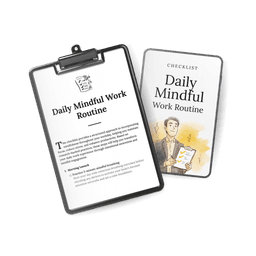
If you'd like ready-made versions of habits like these, 15 Micro-Habits That Transform Your Health Fast is our list of small health habits that fit into a busy day, and 7 Brain Boosters for Exceptional Everyday Results focuses on simple morning habits for focus and energy. Our free Daily Mindful Work Routine checklist brings a few of them into your workday.
Good habits at a glance
| Habit | Two-minute version | Strength of evidence |
| Walk more | Walk around the block after lunch | Large observational studies |
| Short vigorous bursts | Take the stairs briskly | One large observational study |
| Break up sitting | Stand up after each task | Small lab study |
| Fruit and vegetables | One fruit with breakfast | Large observational studies |
| Sleep 7+ hours | Wind-down alarm | Expert consensus |
| Relationships | One message a day | Large review of observational studies |
| Time in nature | Phone calls outside | Large survey |
| Daily planning | Write one task before email | Practical tip |
| Gratitude | One good thing at dinner | Small effects in trials |
| Tidy one space | Clear the desk at night | Practical tip |
The small bad habits wearing you down
Bad habits are rarely dramatic. More often they're small, automatic and repeated dozens of times a day:
- Checking your phone on autopilot. In one small study, most phone interactions were started by the user, not by a notification. Our guide on how to break phone addiction covers how to cut it back.
- Revenge bedtime. Staying up late scrolling to reclaim some time for yourself, then paying for it the next day.
- Caffeine late in the day. In a small study, a dose taken six hours before bed still reduced sleep by more than an hour.
- Sitting for hours without a break. See habit 3 above.
- Putting off the hard task. Our guide on how to stop procrastinating shows how to break big tasks down.
- Stress habits. Skipping meals, holding your breath, never stepping away. 12 Stress Habits That Secretly Wreck Your Health is our quick guide to spotting them and swapping them for healthier routines.
How to break a bad habit
Because habits run on cues, simply trying harder in the moment isn't enough on its own. These help:
- Find the cue. For a few days, note what happens right before the habit: a time, a place, a feeling, a person.
- Change the context. Move the cue or make the habit harder: phone in another room, no snacks on the desk. In a field experiment with 800 people, a program promoting sustainable everyday behaviors worked better for those who had recently moved home, likely because their old cues were disrupted. That study was about sustainability habits, but the idea applies more widely: changes in your life are a good moment to change habits. For strong habits already in place, though, removing temptations helped less than actively watching for slip-ups (see the next step).
- Watch for slip-ups. In studies on controlling strong habits, vigilant monitoring, actively watching for the habit and telling yourself "don't do it", was the only strategy that helped. None of the other strategies people tried helped with strong habits.
- Replace, don't just remove. Decide what you'll do instead when the cue appears, so the gap doesn't fill with the old habit.
- Expect lapses. One slip doesn't mean the habit is back. Restart at the next opportunity.
How to build good habits that last
- Start with one habit. It keeps the change small enough to repeat. Add the next when the first feels automatic.
- Tie it to an existing routine. "After I [something you already do], I will [new habit]."
- Start with the two-minute version. Make it bigger only once the cue reliably triggers it.
- Make it visible. A tick on a calendar helps you see your repetitions.
- Keep it enjoyable. Pair it with something you like: a podcast on your walk, a favorite mug for planning.
Movement is a good place to start, since most adults fall short: the CDC recommends 150 minutes of moderate-intensity activity a week plus two days of muscle strengthening, and according to the CDC, about 47% of adults met the aerobic guideline in 2024.
Frequently asked questions
What are some good habits to have?
Walking daily, short bursts of brisk activity, breaking up long sitting, eating fruit and vegetables, sleeping seven or more hours, keeping in touch with people, spending time in nature, and planning your day briefly.
What are micro habits?
Micro habits are very small versions of a habit, often two minutes or less, like one push-up or one sentence in a journal. They're easy to repeat, which helps the cue and action link form. You can grow them once they're automatic.
How do I start good habits?
Choose one, link it to something you already do every day, start with a version so small it feels almost too easy, and track it. Add the next habit when the first runs on its own.
Why are bad habits so hard to break?
Because they're triggered by cues in your environment and happen with little thought. Changing the cue, making the habit harder and actively watching for slip-ups work better than relying on willpower in the moment.
How many habits should I work on at once?
Starting with one is a sensible default: it keeps the change small enough to repeat every day. When the first feels automatic, add the next.
What are examples of bad habits?
Checking your phone on autopilot, staying up late scrolling, drinking caffeine late in the day, sitting for hours without a break and putting off hard tasks are common ones that quietly cost energy and time.
How we put this guide together
This guide was written with AI assistance and edited by the AllMyGuides team. None of us is a doctor or researcher, and this guide is not medical advice. We started from the habits people say changed their lives and the questions they ask about building and breaking habits. Then we checked each claim against peer-reviewed studies, expert consensus statements and CDC pages, and we marked the tips we couldn't find research for. We opened every source linked above and confirmed that it says what we report (for some studies only the abstract or a university summary was publicly available). Most of these studies are observational, so they show links rather than proof of cause. Last checked: November 2026.