
Self-discipline is the ability to do what serves your long-term goals when something easier or more pleasant pulls you the other way. The APA Dictionary of Psychology defines it as "the control of one's impulses and desires, forgoing immediate satisfaction in favor of long-term goals." Most advice treats it as a muscle you build by resisting harder. Research points somewhere else: people with a lot of self-control tend to resist less, and good habits and avoiding temptation seem to be a big part of why. Those are things you can practice.
Key takeaways
- Self-control and self-discipline are linked to better health, money and grades, but those studies are correlational, and across studies the average link with behavior is small to medium.
- People high in self-control report fewer battles with temptation, and good habits and avoiding temptation seem to be a big part of why.
- The idea that willpower is a muscle that tires out failed two large replications, and "21 days to a habit" is a myth.
- The tools are simple. If-then plans and tracking your progress are the best tested; changing the situation and building habits fit what we know about people high in self-control.
- Missing one day does not undo a habit. In experiments, being kind to yourself after a failure made people more motivated to improve.
What self-discipline is
Psychologists use a few related words. Self-control is, in the APA's definition, "the ability to be in command of one's behavior" and, when short-term gain clashes with a bigger long-term one, "the ability to opt for the long-term outcome." Self-discipline adds a second meaning: "resolute adherence to a regimen or course of action in order to achieve one's goals." In other words, sticking with the plan. Both are closely related to conscientiousness, the personality trait of being "organized, responsible, and hardworking."
That last point matters. Some people are higher in this trait, the same way some are more outgoing. If you are not, you are not broken. Structure is likely to help you more than trying to feel more determined.
Why self-discipline matters (and how much)
The best-known evidence comes from a study that followed about 1,000 children in Dunedin, New Zealand from birth to age 32. Children with more self-control grew into adults with better health, more money and less crime, even after accounting for IQ and the social class they grew up in. In a study of eighth graders, self-discipline predicted grades better than IQ did. In two other studies, people scoring high on a self-control scale also reported better grades, adjustment and relationships.
Keep the size in perspective. A meta-analysis of 102 studies with 32,648 people found the link between self-control and behavior was "small to medium." These studies show who does well, not that forcing yourself harder will change your life. They also contain the most useful clue, which comes next.
The surprising part: disciplined people resist less
In a week-long study of 205 adults, researchers beeped people several times a day to ask about their desires. According to the British Psychological Society's summary, people high in self-control had just as many desires as everyone else. But their desires were generally weaker, caused less inner conflict, and they tried to resist them less often.
Other studies suggest why. People high in trait self-control tend to avoid temptation rather than fight it, for example by choosing a workspace without distractions. Across six studies with 2,274 people, good habits helped explain the link between self-control and outcomes such as grades. The same meta-analysis above found that self-control related more strongly to automatic behaviors than to controlled, deliberate ones.
A review by Angela Duckworth and colleagues puts it into one practical idea: act early. Changing the situation before a temptation gets strong can "nip a tempting impulse in the bud," so it may work better than gritting your teeth in the moment. The authors note that this still needs to be tested directly.
Discipline vs motivation
| Motivation | Self-discipline | |
| What it is | Wanting to do something | Doing it whether or not you feel like it |
| How it behaves | Goes up and down with mood, sleep and stress | Steadier, because it rests on routines and setup |
| Where it comes from | Meaning, interest, a deadline, other people | Habits, plans and a situation that makes the right action easy |
| What to do with it | Use it to design the system | Let the system carry you on low days |
You need both. A common line online is that "motivation follows action": start, and the wanting shows up. We could not find a study that tests that as a general rule. The closest evidence is behavioral activation, a depression treatment that schedules small rewarding activities before people feel like doing them. A meta-analysis of 26 trials found it helped, though most studies were low quality. It is a reasonable principle to borrow, not a law.
Two myths to drop
"Willpower is a muscle that gets tired." This came from "ego depletion" studies, which suggested self-control runs out with use. When tested in a replication across 23 labs and 2,141 people, the effect was close to zero. A second test across 36 labs and 3,531 people, led by researchers who had published ego depletion studies, was also nonsignificant. We cover what this means for everyday choices in our guide to decision fatigue.
"It takes 21 days to build a habit." Researchers at UCL think this number comes from a 1960 self-help book by a plastic surgeon, not from habit research. When a UCL team followed 96 volunteers for 12 weeks, the estimated time for a new habit to become automatic ranged from 18 to 254 days, with the longest times projected beyond the study. Our article on how long it takes to form a habit goes through the details.
How to build self-discipline: a 7-step system
Each step makes the next one easier. Start with one goal only.
1. Pick one behavior and make it small
"Be more disciplined" is not something you can do on a Tuesday. "Walk for 10 minutes after lunch" is. Choose one behavior tied to a goal you care about, then shrink it until it feels almost too easy. You can grow it once it sticks.
2. Change the situation before you need willpower
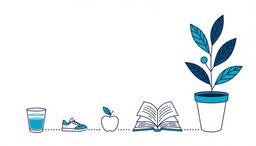
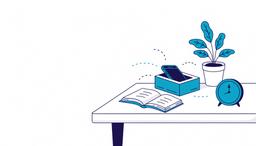
Remove the temptation or the friction before the moment arrives. Put the phone in another room while you work, keep running shoes by the door, leave the snacks at the store. Think of it as deciding once, in advance, instead of fighting the same battle every day. If your main temptation is your phone, our guide on how to break phone addiction covers the setup.
3. Attach it to the same time and place
Habits form through repetition in a stable context. In the UCL study, people did their chosen behavior once a day in response to the same cue, such as after breakfast. Pick a cue you already have every day and do the new behavior right after it.
4. Write if-then plans
An if-then plan links a situation to an action: "If I sit down at my desk, then I open the hardest task first." "If I want to skip the walk, then I just put on my shoes." A meta-analysis of 94 tests found these plans had a medium-to-large effect on reaching goals. Write one for your normal routine and one for the moment you usually give up.
5. Track it where you can see it
A meta-analysis of 138 studies found that monitoring progress helped people reach their goals, more so when the progress was physically recorded or shared. A paper calendar with a tick for each day works fine.
6. Use commitment and pairing for the hard ones
For goals where you know you will waver, raise the stakes in advance. In a smoking study, people offered a savings account whose deposits they would forfeit to charity if they failed a nicotine test were 3 percentage points more likely to pass at six months, though only 11% signed up. Another option is pairing: allow a treat only during the hard task. In one experiment, people who could listen to page-turner audiobooks only at the gym went to the gym more at first, though the effect faded over time.
7. Restart without punishing yourself
You will miss days. In the UCL study, missing one opportunity "did not materially affect" habit formation. What can hurt is treating one slip as proof you have no discipline and quitting, a classic case of black and white thinking. A simple rule: never miss twice. How you talk to yourself matters too. In four experiments, self-compassion after a failure increased motivation to improve, including more time spent studying after a failed test. In another study, college women who were highly restrictive about food and were encouraged to be kind to themselves after eating something unhealthy ate less afterward than those who were not.
Our free Complete Habit Formation System walks you through setting up your first habit, step by step. If you want the full approach, Habits Without Willpower is built on the idea of this article: designing your days so you need less self-control. Build Unbreakable Daily Routines in 30 Days turns it into a 30-day plan, and Conquer Procrastination helps when the hardest part is starting at all.
Self-discipline examples
| Goal | The willpower version | The system version |
| Exercise | "I'll go when I feel up to it." | Gym bag packed the night before, fixed slot three days a week, a tick on the calendar. |
| Phone use | Trying not to check it. | Phone charging outside the bedroom, notifications batched, social apps logged out. |
| Studying | "I'll study all evening." | "If it's 7 pm, I do 25 minutes of flashcards at the kitchen table." |
| Saving money | Resisting purchases one by one. | Automatic transfer on payday, shopping apps deleted. |
| Eating | Fighting cravings at night. | Not buying the snack, a planned evening snack instead. |
| Work | Starting "when I'm focused." | First task chosen the evening before and started before email. |
Self-discipline and ADHD
ADHD is closely tied to executive function, the mental skills that help you plan, start and finish tasks. CHADD explains that executive function impairments make it harder to "begin, work on and complete tasks." That is not something to fix by simply trying harder. External structure may help: visible reminders, body doubling, timers and the setup steps above. Our guide on how to be productive with ADHD covers systems built for that.
When it is not about discipline
Sometimes what looks like a lack of discipline is something else. If you have lost interest in things you used to enjoy, feel exhausted most days, or the problem started with a hard period in your life, low mood, burnout or a health issue may be involved. That is a reason to talk to a doctor, not to push harder. And if your trouble is mostly getting started on tasks that feel overwhelming, our guide on how to stop procrastinating may fit better.
Your first week
| Day | What to do |
| Day 1 | Pick one behavior and shrink it until it feels easy. |
| Day 2 | Change one thing in your space that makes it easier, and one that makes the temptation harder. |
| Day 3 | Choose a daily cue and write two if-then plans. |
| Day 4 | Put a tracker where you will see it and start ticking. |
| Day 5 | Keep going. If you miss, write what got in the way. |
| Day 6 | Fix the obstacle from day 5 with a new if-then plan or setup change. |
| Day 7 | Review the week. If the behavior feels easy, keep it for another week before adding anything new. |
FAQ
Is self-discipline something you are born with?
Partly. Self-control is linked to conscientiousness, a personality trait that differs between people. But much of what looks like discipline is habits and a good setup, and those can be learned.
Why am I disciplined at work but not at home?
Work often supplies the structure for you: set hours, deadlines and other people who expect results. At home you have to build that structure yourself. The steps above are a way to borrow what works at work.
Is discipline more important than motivation?
Neither works well alone. Motivation helps you choose goals and design a system; discipline, in the sense of habits and setup, keeps you going on days the motivation is gone.
How long does it take to build self-discipline?
There is no fixed number. In one study, the estimated time for a single habit to become automatic ranged from 18 to 254 days. Think in months rather than weeks for one behavior, and add the next one only when the first feels easy.
How we put this guide together
This guide was written with AI assistance and edited by the AllMyGuides team. None of us is a psychologist or doctor. We based it on the APA Dictionary of Psychology, CHADD, a UCL blog, the BPS Research Digest and published research, read through PubMed Central, Europe PMC, OpenAlex, Crossref and publisher or library records. We checked each linked source, in full text where we could and otherwise through its abstract, and we left out one well-known study on deadlines because it has been retracted. To understand what people struggle with, we also looked at public forum discussions, mostly through search results; the examples here are illustrative, not personal stories. Last checked in November 2026. This article is for general information and is not medical advice.