
Monotasking means doing one thing at a time, with your full attention, until it's done or you reach a planned stopping point. It's also called single tasking, and it's the opposite of juggling email, chat and a report all at once.
Think of reading five books at the same time. Every time you switch, you flip back a few pages to remember where you were. Read one book at a time and you just keep turning pages. Monotasking is choosing one book, and putting the bookmarks away.
The short version
- Pick one task and write it down.
- Close everything that isn't that task.
- Work in a set block, like 25 to 50 minutes.
- Park new thoughts on a list instead of acting on them.
- Take a real break, then pick the next task.
Monotasking vs multitasking
Most of what we call multitasking is really switching: a few minutes on the report, a quick reply, back to the report, a look at the phone. Each switch costs a little time to find your place again, just like those bookmarks.
| Multitasking | Monotasking |
| Many tabs and apps open | Only what the task needs |
| Replies as messages arrive | Checks messages at set times |
| Feels busy all day | Feels calmer, with clear finishes |
| Lots of half-done tasks | Fewer tasks, actually finished |
| Hard to remember what you did | Easy to see what got done |
Some pairs work fine together, like folding laundry while listening to a podcast. The trouble starts when two tasks both need your thinking.
How to start monotasking
1. Choose one task
Write it on a sticky note or at the top of a notepad: "Draft the proposal intro." Specific beats vague. "Work on the proposal" is too fuzzy to finish.
2. Clear the deck
Close tabs and apps you don't need. Put your phone in another room or face down with notifications off. If you work on a computer, full-screen mode helps a lot.
3. Set a block
Start with 25 minutes if focusing feels hard, or 50 if you're used to it. Use a timer so you don't keep checking the clock. Our guide to time blocking shows how to plan these blocks into your day.
4. Keep a parking list
Your mind will offer ideas mid-task: "Reply to Sam," "buy milk," "check that invoice." Write each one on a list next to you and go back to the task. You'll deal with the list later.
5. Finish or stop on purpose
When the timer rings, either finish the task or write one line about where you stopped and what's next. Tomorrow you'll start right away instead of searching for your place.
6. Take a real break
Stand up, stretch, get water, look out the window. Scrolling your phone isn't really a break: it fills your head with new things to think about.
Monotasking at work
Work is full of interruptions, so a few small agreements help:
- Batch your messages. Check email and chat at set times, like every hour, instead of all day.
- Use a status. "Focusing until 11, will reply after" sets expectations kindly.
- Single-task meetings. Close your laptop or other windows and actually listen. Meetings get shorter.
- Protect one block a day. Even one focused hour each morning makes a big difference.
Monotasking at home
It's not only for work. Try it with small things:
- Eat one meal without a screen.
- Read for ten minutes with your phone in another room.
- Talk with a friend without checking messages.
- Cook while listening to music instead of a video you have to watch.
These moments train the same skill, and they're more enjoyable too. A walk without headphones, a coffee you actually taste, a phone call where you are fully there: small single-task moments add up, and over time the focused blocks at work start to feel easier as well.
What to do when your focus drifts
It will, and that's normal. When you notice it, don't scold yourself. Just bring your attention back, like steering a bike back onto the path. Some days you'll do it twenty times. That still counts as practice.
If you drift a lot, make the task smaller or the block shorter. Ten focused minutes beat an hour of half-focus. Our guide on how to stay focused has more ideas for the harder days.
How to start today
- Write down one task for your next work session.
- Close everything else and silence your phone.
- Set a 25-minute timer.
- Keep a parking list for stray thoughts.
- When it rings, take a five-minute break away from screens.
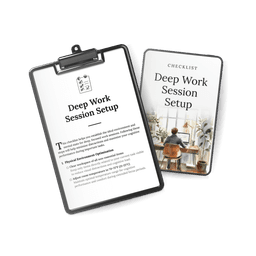
Our free Deep Work Session Setup checklist walks you through getting your space and tools ready before a focused block. For a complete system, The Ultimate Focus Block Setup Protocol helps you plan your focus blocks, handle interruptions and build them into your week. And when a block goes really well, you may slip into that easy, absorbed feeling: our guide on how to enter a flow state explains it.
FAQ
Is monotasking the same as deep work?
They overlap. Deep work is long, focused time on demanding tasks. Monotasking is the everyday habit of doing one thing at a time, big or small.
Can I listen to music while monotasking?
Yes, if it helps you focus. Many people prefer music without words for thinking tasks.
What if my job needs me to respond quickly?
Use shorter blocks, like 15 or 20 minutes, and check messages in between. You still get the benefits.
About this guide
Written with AI assistance and edited by the AllMyGuides team. Everyday tips, not professional advice.