Burnout is a state of deep exhaustion, growing distance from your work and a sense that you can't do it well anymore, resulting from chronic work stress that hasn't been successfully managed. So how do you recover from burnout? In two halves: you refill your energy, and you change at least one of the conditions that drained it. Most advice only covers the first half, which is why many people feel better on vacation and then slide back within weeks. This guide shows you how to check what kind of burnout you have, how to rest in ways that actually restore you, and how to change one thing at work so the recovery lasts.
Key takeaways
- Burnout is about work, not weakness. The WHO describes it as an occupational phenomenon with three signs: exhaustion, cynicism about your job and reduced effectiveness.
- Rest alone rarely fixes it. In one study, burnout returned to its pre-vacation level about three weeks after people went back to work.
- Find the drain. Research points to six areas where work and person can clash: workload, control, reward, community, fairness and values. Change one.
- Rest on purpose. Switching off mentally from work is linked to less exhaustion and better sleep. Sleep and movement matter too.
- Give it time. Mild burnout may ease in weeks or months, but in one Swedish study of clinical patients, a third still had symptoms 18 months later.
Is it burnout? The three signs
Since 2019, the World Health Organization has described burnout in its disease classification (ICD-11) as an occupational phenomenon, not a medical condition. It is defined by three dimensions:
- Exhaustion. Feelings of energy depletion. You wake up tired, and a weekend doesn't refill you.
- Mental distance from your job. Feelings of negativism or cynicism related to your work. You stop caring, or you feel irritated by things that used to be fine.
- Reduced professional efficacy. You feel less effective, and tasks you used to handle take longer or feel impossible.
The WHO says the term refers specifically to the work context. If the same exhaustion comes from caring for a family member or from studying, the same ideas often apply, but it isn't burnout in the strict WHO sense.
You're not alone in this. In the American Psychological Association's 2024 survey of more than 2,000 US workers, 67% reported at least one outcome often associated with workplace burnout in the past month, such as lack of interest, motivation or energy, or feeling lonely or isolated. That doesn't mean two thirds of workers are burned out, but it shows how common the early signs are.
Burnout or depression?
The two overlap. A health information page from Germany's Institute for Quality and Efficiency in Health Care (IQWiG) notes that certain symptoms typical of burnout also occur in depression. One difference: in depression, negative thoughts and feelings aren't only about work. They spread to everything, including things you used to enjoy outside your job.
| Question | More like burnout | Worth checking for depression |
| Where do you feel it? | Mostly about work | In most areas of life |
| Do days off help? | Somewhat, at least for a while | Little or not at all |
| Do you still enjoy things outside work? | Usually yes | Often no |
| How do you see yourself? | Tired and fed up with the job | Worthless or hopeless |
This table is a rough guide, not a test. The same IQWiG page says it's important to consider other possible causes together with a doctor, because exhaustion can also come from physical conditions. If you're unsure, or the symptoms have lasted for weeks, talk to your doctor or a mental health professional. If you ever have thoughts of harming yourself, call or text 988 in the US to reach the Suicide and Crisis Lifeline.
Why rest alone doesn't fix burnout
Many people try to recover with a vacation. It helps, but the effect is short. A meta-analysis of vacation studies found small positive effects on health and well-being that soon faded after people went back to work. In an older study of 76 clerks, burnout dropped during vacation, had partly returned three days after it and was fully back after three weeks.
The reason is simple: if you return to the same conditions, they drain you again. Burnout researchers Christina Maslach and Michael Leiter describe the causes of burnout as mismatches between a person and their job, and they identify six key areas where these imbalances take place:
- Workload: too much to do, for too long, without recovery.
- Control: little say over how, when or what you work on.
- Reward: effort that isn't recognized, financially or otherwise.
- Community: conflict or isolation at work.
- Fairness: decisions that feel unjust.
- Values: work that clashes with what you think matters.
Intervention research points the same way. In a review of 19 studies on doctors, programs that changed the organization reduced burnout more than programs aimed only at the individual, although the overall benefit was small. Another review of 25 studies found that individual programs helped in the short term, while programs that combined individual and workplace changes had longer lasting effects. You can't redesign your company alone, but you can usually change one thing.
How to recover from burnout: a 4-phase plan
Phase 1: Stop the bleeding (first one to two weeks)
Before you add anything, remove load. List everything on your plate and sort it into three groups: must do, can delay, can drop or hand over. Cut the second and third groups as far as you can, even if it feels uncomfortable. Postpone big decisions, like quitting, until you're less depleted, unless your health or safety is at risk. If you can take sick leave or time off, this is the moment to use it.
Phase 2: Find your drain
For one week, write down at the end of each day what drained you most and which of the six areas it belongs to. Often one or two areas stand out. Also note which of the three signs you feel most: exhaustion, cynicism or feeling ineffective. Maslach and Leiter link exhaustion mainly to workload, and cynicism more to community and to a clash of values.
If you'd like a structured way to do this, Your Personal Burnout Detector is our 7-day system for tracking warning signs in your body, thoughts, emotions and actions, with response plans for when they show up.
Phase 3: Refill on purpose
Not all rest restores you. Researchers describe four recovery experiences during time off work: psychological detachment, relaxation, mastery (learning or doing something challenging that isn't work) and control over your own time. A meta-analysis covering more than 38,000 employees found that detaching mentally from work was associated with less exhaustion, more well-being and better sleep. Most of these studies were correlational, so they show a link, not proof of cause.
- Detach: set a clear end to your workday, turn off work notifications after it and keep work apps off your personal phone if you can. Our guide on how to lower cortisol covers more everyday habits that help the stress response switch off.
- Sleep: protect it first. In a two-year study of 388 Swedish workers, sleeping less than six hours was the main risk factor for developing burnout, although only 15 people in the study became clinical cases. Our guide to a morning and night routine covers the evening habits that make this easier.
- Move: a review of 10 studies found evidence that physical activity reduces exhaustion, though only one study was high quality. Walking counts.
- Do something that isn't work and isn't a screen: a hobby, a skill, time with people who give you energy.
Phase 4: Change one condition
Pick the area from phase 2 that drains you most and choose one change. Some examples:
- Workload: ask your manager to rank your priorities, and say what will slip if everything stays urgent.
- Control: ask for a block of focused time each day, or a say in deadlines.
- Community: name one relationship that drains you and decide how to limit or repair it.
- Values or reward: if the mismatch is deep and nothing moves, start planning a change of role or job, calmly and on your own timeline.
Then rebuild slowly. Add one routine back at a time and keep a lighter version for bad days. The Bad Day Protocol is our guide for exactly those days: how to scale routines down instead of dropping them, and how to replace guilt with something more useful. If your work is creative, The Creative Energy Management System helps you map when your energy is highest and match tasks to it.
If you can't take time off
Many people can't stop working while they recover. Recovery is still possible, though it may take longer. Focus on what you can control within the day:
- Take short breaks away from your screen every hour or two, even just a few minutes.
- Do your hardest task when your energy is highest, and batch email and meetings.
- Create a shutdown ritual: write tomorrow's top three tasks, close everything, say "done".
- Keep one evening a week with no work and no obligations.
- Protect sleep above everything else.
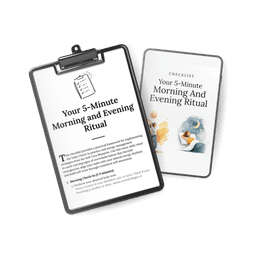
Our free 5-Minute Morning and Evening Ritual checklist gives you a short start and end to the day built around noticing your energy. If routines feel hard to restart, our guide on how long it takes to form a habit explains how to rebuild them without relying on willpower.
How long does burnout recovery take?
There's no reliable number for everyday burnout, and many online timelines aren't based on studies. The research that exists comes mostly from people with clinical, stress-related exhaustion, which is more severe than what most readers feel. In a Swedish study of 232 patients, one third still showed symptoms of burnout 18 months later. In a seven-year follow-up of patients from a stress clinic, about a third were still judged to have stress-related exhaustion, and 73% reported reduced tolerance for stress.
The practical takeaway: if you caught it early, many people notice change within weeks to a few months. If you've been running on empty for a long time, expect months, and get professional support. Recovery is rarely a straight line; good weeks and bad weeks are normal.
What about the "12 stages of burnout"?
You may have seen a list of 12 stages, from "a compulsion to prove yourself" to complete collapse. It comes from psychologist Herbert Freudenberger and Gail North's popular book Women's Burnout (1985; German edition 1992), not from a formal study. A 2019 review notes that the number of stages and their order are still not agreed on. We could not find a study confirming that people move through them in sequence. The three dimensions above are the framework researchers use. If you want a simple list of early warning signs, 7 Hidden Signs You Are Headed for Burnout walks you through them, with small changes for each.
And if burnout is showing up as a pile of tasks you can't start, our guide on how to stop procrastinating when everything feels too big covers how to break things down.
Frequently asked questions
How do you recover from burnout?
Reduce your load first, find which part of work drains you most, rest in ways that let you switch off from work, protect sleep and movement, and change at least one condition at work. Rest without changing anything tends to wear off within weeks.
What are the first signs of burnout?
Exhaustion that a weekend doesn't fix, growing cynicism or irritation about your job, and the feeling that you're less effective than before. These are the three dimensions the WHO uses.
How long does it take to recover from burnout?
It depends on how deep it is. Mild cases may ease in weeks to a few months. In one Swedish study of patients with clinical stress-related exhaustion, about a third still had symptoms after 18 months.
Can you recover from burnout without quitting your job?
Often, yes, especially if you can change one important condition, like workload or control. If the main problem is a deep clash of values or unfair treatment that doesn't change, a new role may be part of recovery.
Is burnout a medical diagnosis?
The WHO classifies burnout as an occupational phenomenon, not a medical condition. Some countries use related clinical diagnoses, and a doctor can check whether something else, like depression or a physical condition, is involved.
Does a vacation cure burnout?
A vacation helps, but studies show the benefit fades after you return, in one study within about three weeks. Use time off to recover and to plan what you'll change when you go back.
How we put this guide together
This guide was written with AI assistance and edited by the AllMyGuides team. None of us is a doctor or therapist, and this guide is not medical advice: if you're struggling, please talk to a doctor or mental health professional. We started from the questions people ask about burnout, especially how to recover without quitting and how long it takes. Then we checked each claim against the WHO, peer-reviewed studies and reviews, and health information from public institutions. We opened every source linked above and confirmed that it says what we report (for some studies only the abstract was publicly available). Many burnout studies focus on healthcare workers or on clinical patients in Sweden, so we treat their numbers as estimates for other readers. Last checked: November 2026.