
Self-sabotage is getting in the way of something you actually want, a bit like hiding your own car keys and then being late. You want the new job, and the application sits almost finished until the deadline waves goodbye.
There's no villain in this story. There's usually just a moment where the easy thing wins. Find that moment, change it a little, and you get your keys back.
The short version
- Look at the last time it happened, not your whole life.
- Check that you still want the thing.
- Make one "if this, then that" plan for the tricky moment.
- Shrink the finish line and put a wait on big exits.
Where the keys usually end up
Self-sabotage likes to look reasonable. It shows up as extra reading, tidying, or "waiting for a better time."
| Where | What it looks like | The excuse |
| Work | You get praised, then coast for two weeks | "I've earned a break." |
| Projects | The website is ready and nobody has the link | "The font isn't right yet." |
| Mornings | Up until 1 a.m. before every early start | "I work better under pressure." |
| Learning | You buy a third course before opening the first | "I need a solid base." |
| Home | You stop the one routine that was going well | "I'm fine now, I don't need it." |
Two spots deserve extra attention: right after something good, and right before the end. Both come with a new question. Can I do it again? What will people say? No wonder the sofa looks nice.
How to stop self-sabotage in 6 steps
1. Replay the last time
Take one recent case and fill in five lines:
- What happened just before?
- What did I feel like doing?
- What did I do?
- What got easier right away?
- What did it cost me later?
Line four is the gold. If you put off the call, you got a quiet afternoon. Now you know what you were really after.
2. Ask if you still want it
Picture the result with no audience. Nobody claps, nobody knows. Still want it? Great, keep going.
If not, drop it on purpose. Canceling a goal you've outgrown isn't sabotage. It's housekeeping.
3. Write one "if, then" plan
Use the moment you found in step 1. "If I feel like closing the file, then I write two more lines first." One plan, one moment. You can add another next month.
4. Put a wait on big exits
Don't quit, cancel or delete in the first wave. Pick your waits ahead of time: one hour for a message, one day for a cancellation, one week for dropping a course. If you still want out after that, go ahead.
5. Make the finish line smaller
Write what "done" means in one line. "Website is live with three pages." Not eleven pages and a logo. Then cut the last stretch into bits of five minutes, because the last stretch is where the boring bits live.
6. Plan your comeback
You'll slip. Decide today what happens after: "When I miss a day, I do five minutes the next morning." Then a slip is just Tuesday, not the season finale. If one slip tends to wipe out your whole week, see black and white thinking.
An example: the application that never left
Say you found a job you like. The letter is written. For six days you've been "polishing."
- Just before: you opened the send page.
- Felt like: checking the fridge.
- Did: changed "excited" to "keen" and back.
- Easier right away: nobody could say no today.
- Cost: six evenings.
The plan: "If I open the page and want to edit again, then I ask Sam to read it once and I send it by 7." Done means sent. Not perfect, sent. Then you go see a movie so you can't refresh your inbox.
The 10-minute rescue
For the exact moment you're reaching for the escape hatch:
- One minute: say it. "I'm about to hide the keys."
- Four minutes: stand up and change rooms. The phone stays behind.
- One minute: ask, "What do I get in the next hour? What will I wish I'd done on Friday?"
- Four minutes: do one tiny piece, or write an honest line: "I need one more day, you'll have it Thursday."
Having a rough one? Do the first two and call it a win. Not making it messier is progress.
What doesn't help
- Digging for the deep reason. You can know exactly why you stall and still stall. Change the moment instead.
- A giant fresh start. New app, new notebook, 5 a.m. alarm. That's often the keys in a fancier drawer.
- Name-calling. "I'm so lazy" gives you nothing to do next. "I'll open the file at 9" does.
- Doing it in secret. Tell one friend your finish line and the day. A little friendly nosiness goes far.
Try it this week
- Monday: replay one case, five lines.
- Tuesday: check you still want it, and write what "done" means.
- Wednesday: write your "if, then" plan and put it on the fridge.
- Thursday: pick your three waits.
- Friday to Sunday: one five-minute piece a day, with a big X on the calendar.
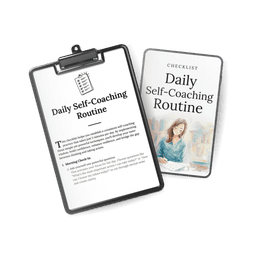
Our free Daily Self-Coaching Routine keeps this going with a morning question, a five-minute reset and a short look back in the evening. If big projects are where you stall, Break Down Overwhelming Projects helps you split them into milestones, modules and tiny tasks. And Conquer Procrastination covers goals, to-do lists, distractions and saying no.
Keep reading: how to stop procrastinating for the starting part, and self-discipline for the keeping going part.
FAQ
What is self-sabotage in simple words?
It's doing things that block your own plan, often without meaning to. You want to finish, and you keep finding something else to do.
Why do I do it when things are going well?
A good result raises the bar, and a raised bar can feel like a lot of work. Make the next step tiny so there's less to run from.
How do I stop for good?
Aim for sooner, not never. Notice it earlier, lose one hour instead of one week, and come back faster each time.
About this guide
Written with AI assistance and edited by the AllMyGuides team. Everyday tips, not professional advice.