Habit stacking means putting a new habit right behind one you already have. After the coffee, one line in the notebook. After the keys, the shoes on the rack.
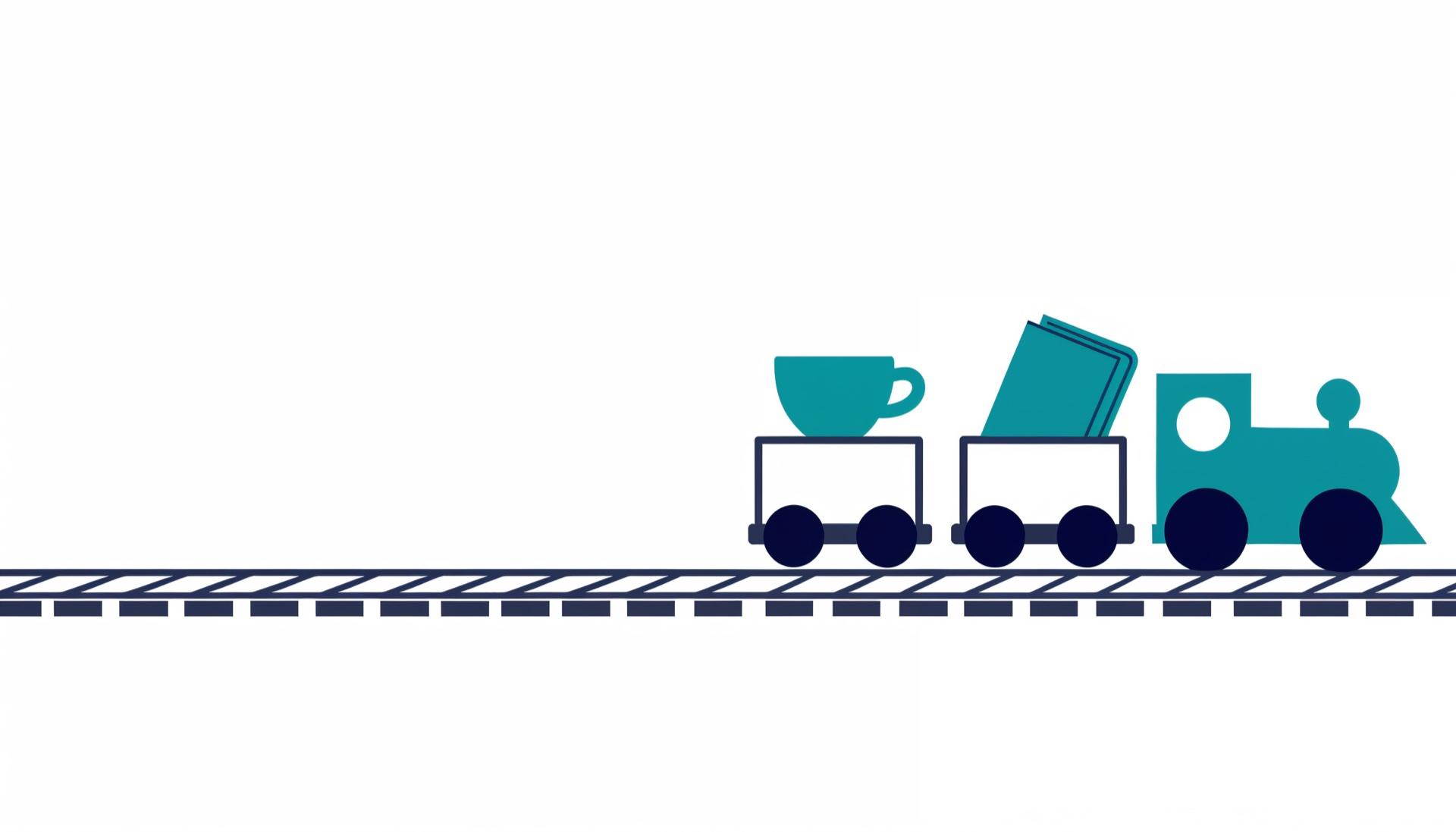
Think of a train. Your old habit is the engine, and it's leaving the station anyway. The new one is a carriage. You don't need to push it uphill every morning. You just need a decent coupling.
The short version
- Write one line: "After I [old habit], I will [new habit]."
- Choose an engine that runs every single day.
- Keep the first carriage tiny: two minutes or less.
- Add the second one only when the first stays on the rails.
Why "I'll do it at some point" never leaves the station
"I'll stretch more." Lovely. When? Before lunch? After the call? During the ads? By ten in the evening it has missed every train of the day, and it gets moved to tomorrow.
Meanwhile you made coffee, brushed your teeth, locked the door and plugged in your phone without one pep talk. Those trains are always on time. Habit stacking is just a way of getting on.
How to build a habit stack in 5 steps
1. List your engines
Write down ten things you did yesterday without deciding to. Kettle on. Shoes off. Laptop open. Dog out. Light switch. The duller, the better.
2. Pick one that fits
The engine should happen as often as you want the new habit to happen, in a place where you can do it. "After I park the car, I'll water the plants" only works if the plants are in the garage.
3. Make the carriage small
Two minutes at most. One page, one drawer, one message, one line of Spanish. A long freight train takes forever to get moving. A single carriage barely notices.
4. Write the line and put it there
Use this exact shape:
"After I [thing I already do], I will [tiny new thing]."
Write it on a note and stick it where the engine runs: on the kettle, the mirror, the laptop lid. Then put what you need next to it. If the book is in another room, the train leaves without it.
5. Let it run, then add
Leave it alone until you catch yourself doing it without the note. Then you can add one more. If you're wondering when that will be, read how long it takes to form a habit.
Habit stacking examples for a normal day
Take one. Please don't take twelve.
| After I... | I will... |
| Switch on the kettle | Write the one thing that matters today |
| Open the curtains | Make the bed, lumps allowed |
| Open my laptop | Start the first task before email |
| Hang up from a call | Write the next step in one line |
| Come back from lunch | Clear the desk for two minutes |
| Hang up my coat | Put keys and wallet in the bowl |
| Start the dishwasher | Wipe one counter |
| Put the kids to bed | Set out tomorrow's clothes |
| Plug in my phone | Read one page |
One stack, built carriage by carriage
Say you want calmer evenings. Your engine is the dishwasher. You start it every night around eight, because otherwise there are no cups.
- Weeks one and two: "After I start the dishwasher, I wipe one counter." That's the whole plan.
- Then: "After I wipe the counter, I write tomorrow's first task."
- Later: "After I write the task, I put my phone in the hallway."
Three small carriages, five minutes, and the kitchen does the remembering. For a whole train at the other end of the day, see our morning routine.
When the train gets stuck
| What happens | What to change |
| You forget it | The engine is too vague. "After breakfast" becomes "after I put my cup in the sink" |
| You remember, but skip it | The carriage is too heavy. Cut it in half |
| It only works on weekdays | Pick an engine that also runs on Sunday, or make it a weekday train on purpose |
| The stack falls apart in the middle | Too many carriages. Go back to the first one |
| It's boring | Good. Add a song, not another habit |
Messy days and missed trains
You're traveling, the kettle is broken, guests are asleep in the kitchen. No engine, no train. That's fine. Pick a spare one for days like that: "After I brush my teeth" runs almost anywhere.
Missed it completely? Don't run after it with a double portion. There's another one tomorrow, same platform. And if you often drop everything after one slip, our piece on black and white thinking has some handy lines.
Can you stack away a bad habit?
Sort of. Find the engine in front of it. If sitting on the sofa is what starts the scrolling, give the sofa a new carriage: "After I sit down, I pick up the crossword." Put the crossword on the armrest and the phone on the shelf. For more swaps like that, flip through our good habits list.
Couple your first one today
Finish this line before you close the page: "After I ____, I will ____." Read it out loud. If you'd be embarrassed by how small it is, it's the right size. Now write it on a note and go stick it on the engine.
Our free Complete Habit Formation System checklist has a part on habit stacks inside a 90-day plan. If you'd like ready-made lines to copy, there's 12 Proven Habit Stacking Formulas for Unstoppable Execution. And Build Your First Habit Molecule shows you, step by step, how to link two or three tiny tasks to something you do every day.
FAQ
What is habit stacking in simple words?
It's doing a small new habit right after something you already do, so the old one reminds you of the new one.
How many habits can I stack?
Start with one. When it runs on its own, add another. Three short ones in a row is plenty for most evenings.
What's a good first habit stack?
"After I switch on the kettle, I will write one thing that matters today." You already wait for the kettle, so you may as well use it.
About this guide
Written with AI assistance and edited by the AllMyGuides team. Everyday tips, not professional advice.