The best public speaking tips come down to three things: know your one main point, practice out loud, and speak to people rather than at them. You don't need to be a natural. Most good speakers got there with small, repeatable habits.
Think of a good tour guide. They don't recite a script. They look at the group, stop where there's something worth seeing, and say "Follow me." People relax because the guide knows where they're going. A good talk works the same way.
The short version
- Write your main point in one sentence before anything else.
- Practice out loud at least three times.
- Slow down and pause more than feels natural.
- Look at real faces, one at a time.
Before, during and after
| When | Focus on | Skip |
| Before | One main point, a simple outline, practice out loud | Writing every word to read out |
| During | Pauses, eye contact, a steady pace | Apologizing for being nervous |
| After | One thing that went well, one to try next time | Replaying every small slip |
15 public speaking tips
Preparing
- Start with one sentence. "By the end, I want them to know..." Everything else supports it.
- Use three parts. Three points are easy to follow and easy to remember.
- Write notes, not a script. A few key words per point keep you talking, not reading.
- Add one story or example. People remember stories long after the slides.
- Practice out loud. Reading in your head isn't the same. Stand up and say it, ideally to a friend or your phone's camera.
On the day
- Arrive early. Check the room, the screen and where you'll stand.
- Talk to a few people first. A friendly face or two makes the room feel smaller.
- Have water nearby. A sip is also a natural pause.
- Know your first two sentences by heart. The start is when nerves are strongest. After that, it gets easier.
- Expect some nerves. A fast heartbeat before a talk is normal and usually fades once you start.
While you speak
- Slow down. Nerves speed you up. Aim for a pace that feels a little too slow.
- Pause. A short silence after a key point helps it land and gives you a breath.
- Look at one person per sentence. Then move to someone else. It feels like a conversation.
- Keep your hands free. Let them move naturally, or rest them lightly in front of you.
- If you lose your place, check your notes and carry on. The audience rarely notices.
How to start a presentation
The first minute sets the tone. Try one of these openers:
- A question. "How many emails did you get yesterday?"
- A short story. "Last spring, our team missed a launch by one day..."
- A surprising fact, if you have a good source for it.
- The promise. "In ten minutes, you'll know three ways to cut meeting time."
- A picture. One image on the screen, and a pause before you speak.
Skip long thank-yous and "I'm not a great speaker." Go straight to something interesting. If you need a short introduction of yourself, our elevator pitch examples show how to keep it to a few lines.
Body language and voice
- Stand steady. Feet apart, shoulders relaxed. Avoid rocking.
- Smile at the start. It relaxes you and the room.
- Speak to the back row. If they can hear you, everyone can.
- Vary your tone. A little louder for key points, a little softer for stories.
The same habits help in job interviews. See our guide on how to prepare for an interview.
Speaking in meetings and on video calls
Not every talk has a stage. The same tips work in smaller settings:
- In meetings, say your main point first, then the reason. "I think we should move the launch. Here's why."
- On video calls, look at the camera when you make a key point, not at your own face on screen.
- Raise the camera to eye level and sit where the light is in front of you.
- Keep a sticky note with your three points next to the screen.
A one-week practice plan
- Day 1: Write your main point and three parts.
- Day 2: Add one story and your opening lines.
- Day 3: Practice out loud, alone, with a timer.
- Day 4: Record yourself on your phone and watch it once.
- Day 5: Practice in front of one friend or coworker.
- Day 6: Trim anything that runs long.
- Day 7: One calm run-through, then rest.
What to skip
- Reading your slides. The audience can read faster than you speak.
- Too many slides. One idea per slide, few words.
- Memorizing every word. If you forget one line, the whole thing wobbles. Know the points instead.
- Waiting to feel ready. Confidence comes from doing it, not before.
How to start today
- Pick a topic you know well.
- Write the one-sentence main point.
- Talk about it for two minutes to your phone's camera.
- Watch it back and pick one thing to improve.
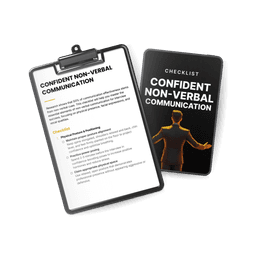
Our free Confident Non-Verbal Communication checklist covers posture, eye contact and gestures, so you look as prepared as you are. For bigger moments like interviews, Pre-Interview Confidence Protocol walks you through the days before. Speaking up at work? See how to network for small, low-pressure ways to practice.
FAQ
How can I get better at public speaking fast?
Practice out loud and record yourself. Watching one recording teaches more than reading ten tips.
Is it normal to be nervous before speaking?
Yes. Most speakers feel it, even experienced ones. Good preparation and a slow start help it pass.
How long should I practice?
Run the full talk out loud at least three times. Short talks need just as much practice as long ones.
About this guide
Written with AI assistance and edited by the AllMyGuides team. Everyday tips, not professional advice.