A follow up email is a short message you send when you haven't heard back, or to keep something moving after a meeting, a proposal or a request. The best ones are friendly, brief and make it easy to reply. Below you'll find when to send one, a simple template and seven follow up email examples to copy.
Think of a good waiter. They don't stand over your table, but after a while they stop by: "Can I get you anything else?" It's not pushy. It just makes the next step easy. A follow up email does the same.
The short version
- Reply in the same thread, so the history is right there.
- Say in one line why you're writing.
- Ask for one clear thing.
- Keep it shorter than your first email.
When to send a follow up email
| Situation | When to follow up |
| No reply to a question or request | After a few working days |
| After a meeting | The same day or the next morning |
| After sending a quote or proposal | About a week later |
| A deadline is coming | A few days before it |
| After a job application | About a week after the closing date |
If the first email said "by Friday," wait until after Friday. If it was urgent, a phone call or a quick message may work better than another email.
How to write a follow up email
- Keep the thread. Reply to your first email instead of starting a new one.
- Open with context. "Just following up on the quote I sent last Tuesday."
- Make one ask. A yes or no, a date, a file. Not three things.
- Make replying easy. Offer two options or a short question.
- Stay friendly. Assume they're busy, not ignoring you.
For the basics of greetings, sign-offs and tone, see our guide on how to write a professional email.
Follow up email template
Hi [Name],
I wanted to follow up on my email from [day] about [topic]. Could you let me know [the one thing you need] by [date]?
Happy to jump on a quick call if that's easier.
Thanks, [Your name]
Follow up email examples
These are samples we wrote. Change the names and details.
1. Follow up email after no response
Hi Jordan,
Just bringing this back to the top of your inbox. Did you get a chance to look at the schedule I sent on Monday? A quick yes or no is fine.
Thanks, Sam
2. Second follow up
Hi Jordan,
I know things are busy. I'll plan with the current schedule unless I hear otherwise by Thursday. Just let me know if anything needs to change.
Best, Sam
3. Follow up email after a meeting
Hi team,
Thanks for today. Here's what we agreed: Mia sends the draft by Wednesday, I book the venue, and we meet again next Monday.
Shout if I missed anything.
4. Gentle reminder email
Hi Alex,
A friendly reminder that the photos for the newsletter are due this Friday. If you need a few more days, just tell me and I'll adjust the plan.
Thanks, Priya
5. After sending a quote or proposal
Hi Ms. Lopez,
I hope the quote for the kitchen shelves was helpful. Do you have any questions, or would you like me to hold a date for the work?
Kind regards, Dan
6. After sending a resume
Hello Mr. Brooks,
I applied for the office coordinator role last week and wanted to check if you need anything else from me. I'm still very interested and happy to share more examples of my work.
Thank you, Lena
After an interview, the rules are a bit different. See our thank you email after an interview guide.
7. After meeting someone new
Hi Chris,
It was great to meet you at the workshop yesterday. You mentioned a good bookkeeping app for small shops. Could you send me the name when you have a minute?
Thanks again, Tara
Follow up email subject lines
If you start a new thread, use a clear subject line:
- "Following up: [topic]"
- "Quick question about [topic]"
- "Next steps from today's meeting"
- "Reminder: [item] due [day]"
- "Checking in on the quote for [project]"
- "Great to meet you at [event]"
How many times should you follow up?
Two follow ups is usually enough. If there's still no reply, send a last friendly note that closes the loop: "I'll assume the timing isn't right, so I won't keep filling your inbox. Feel free to reach out anytime." It's polite, and it often gets a reply.
What to skip
- Guilt. "As I already said twice" makes people less likely to answer.
- A wall of text. If they didn't read the long version, they won't read a longer one.
- Daily follow ups. Give people a few days.
- Vague asks. "Any thoughts?" is harder to answer than "Does Tuesday work?"
How to start today
- Search your sent folder for emails with no reply from last week.
- Pick the one that matters most.
- Reply in the thread with one line of context and one clear ask.
- Put a reminder in your calendar to check again in a few days.
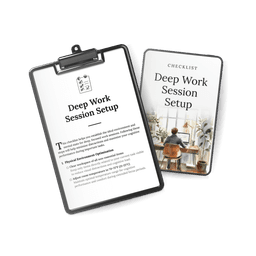
Email is easier when it has its own time. Our free Deep Work Session Setup helps you plan focused blocks, so replies and follow ups get a slot instead of eating your whole day. For more ways to win back your week, Reclaim 15 Hours of Your Time Each Week covers the habits that save time at work.
FAQ
Is it rude to send a follow up email?
No. People get a lot of email, and a short, friendly reminder usually helps them.
How long should I wait before following up?
A few working days for most emails. Sooner if there's a deadline, longer for big decisions like a proposal.
Should I follow up by email or phone?
Email is fine for most things. If it's urgent or you've already sent two emails, a short call can be quicker.
About this guide
Written with AI assistance and edited by the AllMyGuides team. Everyday tips, not professional advice.