
Want to know how to negotiate? Decide what you want and where you'd walk away, learn what the other side cares about, make a clear ask, listen, and trade small things to reach a deal you both like. Negotiation is a conversation, not a fight. Below you'll find six simple steps, tactics that work, and short scripts for rent, prices and job offers.
Think of two friends ordering one pizza. One loves mushrooms, the other wants olives. Nobody needs to "win." Half and half, and both leave happy. Most good negotiations end up looking like that pizza.
The short version
- Know your goal and your walk-away point before you start.
- Ask questions and listen more than you talk.
- Make a clear, specific ask, then pause.
- Trade: give something small to get something you value.
- Stay friendly. You'll often deal with the same people again.
How to negotiate in six steps
- Know what you want. Write down your ideal outcome, a result you'd be happy with, and the point where you'd say no thanks.
- Do your homework. Check what similar things cost or pay, so your ask is based on something real.
- Learn what they care about. A landlord may care about a reliable tenant more than a slightly higher rent. A seller may want a quick sale.
- Open with a clear ask. "Would you take this amount if I pay today?" is easier to answer than "Can you do better?"
- Listen and trade. If they can't move on one thing, ask about another: timing, extras, length of the deal.
- Confirm it in writing. A short email that sums up what you agreed avoids confusion later.
Negotiation tactics that work
| Tactic | What it sounds like | When it helps |
| Ask open questions | "What matters most to you here?" | At the start, to find room to trade |
| Name a number first | "I was thinking of this amount." | When you know the fair range well |
| Use a short pause | Make your ask, then stay quiet | Right after an offer |
| Trade, don't give | "I can do that if you can do this." | When they ask you to move |
| Ask for time | "Let me think about it until tomorrow." | When you feel rushed |
| Walk away politely | "Thanks, it's not quite right for me." | When the deal is below your limit |
More negotiation tips
- Be friendly and calm. People say yes more easily to someone they like.
- Talk about shared goals. "We both want this to work long term."
- Look for extras. Delivery, a start date, a longer contract or a small add-on can be easier to get than a lower price.
- Don't fill the silence. A pause after your ask gives the other person room to think.
- Keep your limit to yourself. Share your ask, not your bottom line.
Negotiation examples you can use
Here are three short scripts we wrote to show the steps in action.
How to negotiate rent
Landlords often value a steady, easy tenant. Lead with that.
"I really like the apartment and I'd love to stay long term. I've always paid on time. If I sign for a longer lease, would you be open to keeping the rent where it is?"
How to negotiate a price
For a used item, furniture or a service, be polite and specific.
"I'm interested and I can pick it up today. Would you take a little less if I pay now?"
How to negotiate a job offer
Thank them first, then ask. Pay is only one piece. Start date, remote days, training and time off can also be discussed.
"Thank you, I'm excited about this role. Based on the scope of the job and what I've seen for similar roles, I was hoping for a bit more. Is there flexibility on the salary or on the number of remote days?"
For the full process, see our guide on how to negotiate salary. Already in the job? Here's how to ask for a raise.
Common negotiation mistakes
- Accepting the first offer right away. It's fine to say, "Let me think about it."
- Apologizing for asking. A calm, clear ask sounds more confident.
- Making it personal. Focus on the deal, not on who is right.
- Talking too much. Long explanations can weaken your ask.
- Forgetting to write it down. Memories of a deal can differ a week later.
Practice with small negotiations
The easiest way to get better is to try in low-pressure moments. Ask a shop about a small discount on a bundle, ask for a later deadline on a task, or ask a service provider about a better plan. Each small "yes" or friendly "no" makes the next conversation easier. If you're thinking about turning down an offer that doesn't fit, our guide on how to decline a job offer has polite templates.
Get ready for your next negotiation
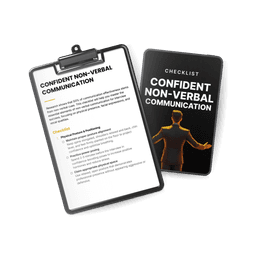
Body language matters at the table too: open posture and steady eye contact help your words land. Our free Confident Non-Verbal Communication checklist covers the basics. To prepare the numbers and facts before you sit down, Pre-Negotiation Research walks you through what to find out first. And for a complete guide to the whole conversation, from opening to closing, see The Art of Negotiation.
FAQ
What is the first rule of negotiation?
Know your walk-away point before you start. It keeps you calm and stops you from agreeing to something that doesn't work for you.
Who should make the first offer?
If you know the fair range well, going first can set a helpful starting point. If you're unsure, ask questions first and let them name a number.
Is it rude to negotiate?
No. Asking politely is normal in many situations, from job offers to rent. The worst common answer is a friendly no.
About this guide
Written with AI assistance and edited by the AllMyGuides team. Everyday tips, not professional advice.